Repair, refurbish or remanufacture industrial equipment
At GATE C, we help industrial operations, aftersales and procurement leaders extend equipment life through repair, refurbishment and remanufacturing.
Repair, refurbishment and remanufacturing are gaining ground
Restoring used equipment remains marginal compared with new manufacturing. In 2016, the European Remanufacturing Network estimated the European remanufacturing industry at around €30 billion a year, or 1.9% of new product manufacturing across the nine sectors studied.
Yet the market is growing fast. Komatsu roughly quadrupled its component remanufacturing volume between 2010 and 2024, and now operates 45 sites in 16 countries.
2 %
Share of remanufacturing in industrial manufacturing (McKinsey, 2025)
x 2
Expected growth of the remanufacturing market over the next 3 to 4 years (McKinsey, 2025)
Life extension involves three functions. Industrial operations can restore the equipment the company manufactures: Ahrend, for example, set up a refurbishment line for its office chairs. Aftersales can sell repair services: Rockwell Automation repairs its own automation equipment, as well as its competitors’. Finally, procurement can buy refurbished equipment, such as forklift trucks or fan coil units.
Our services
Assess the market
We analyse the repair, refurbishment and remanufacturing market by equipment family: customer segments, competitors (independent repairers, compatible parts, low-cost new products), prices and customer expectations. We also identify the sources of used equipment that could be collected: who holds it, where, and in what condition.
Define a life-extension strategy
For each equipment family, we select the life-extension route (repair, refurbishment or remanufacturing) based on technical feasibility and demand. We then define how to recover used equipment (take-back, deposit, unit exchange), who performs the work (in-house workshop or partner) and how to position the offer against new products: price, warranty, brand, channel.
Confirm the business case
For each family, we quantify the costs of collection, disassembly and restoration, the selling prices and the impact on new product sales. For users, we compare the total cost of repairing, buying restored equipment and replacing. We then prepare the launch: organisation, KPIs and pilot.
Our repair case studies
Furniture repair diagnostic
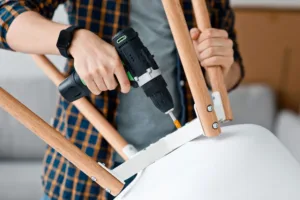
For the producer responsibility organisation Ecomaison, ahead of the launch of its Repair Bonus, we mapped breakdowns and repairs by furniture category (kitchen and bathroom, sofas and armchairs, indoor furniture, outdoor furniture, bedding). We found that the existing repair offer covered less than 20% of breakdowns, and made proposals to meet repair demand.
Ecomaison subsequently set up a sofa repairer network and a repair bonus.
Ecomaison a par la suite mis en place un réseau de réparateurs de canapé et un bonus réparation.

DIY and garden product repair diagnostic
For Ecomaison, we listed the main breakdowns and repairs across seven DIY and garden product families, then identified 16 levers to remove barriers to repair.
Our remanufacturing case studies
Office furniture remanufacturing
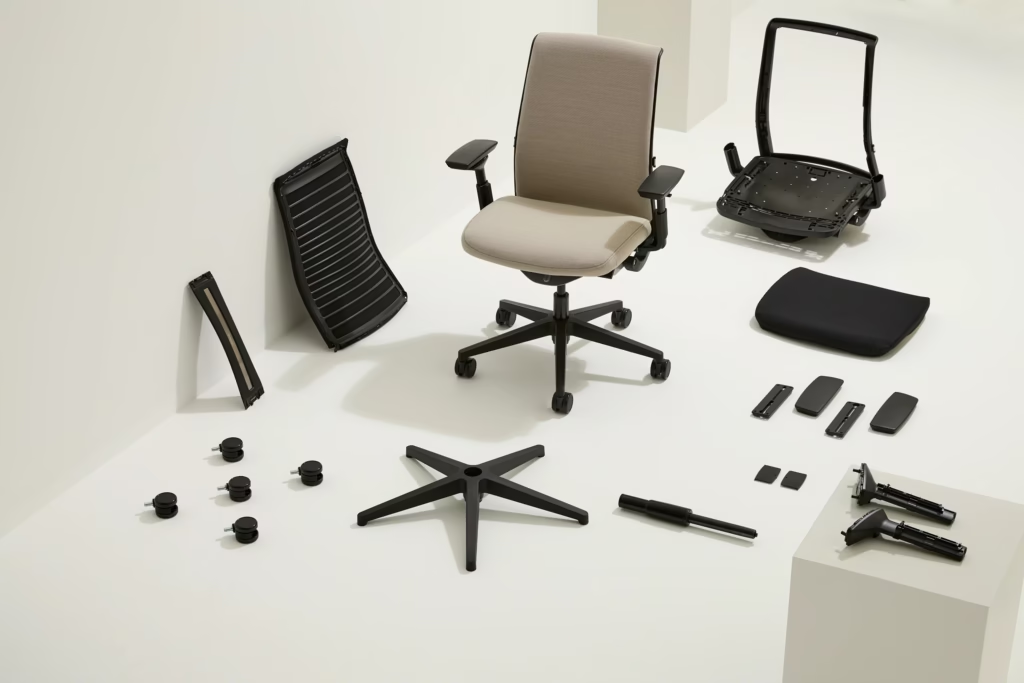
For a global office furniture manufacturer, we designed an offer to sell refurbished furniture. We compared operating models and assessed the return on investment.
Our client subsequently launched a refurbished furniture offer.
Spare parts remanufacturing strategy
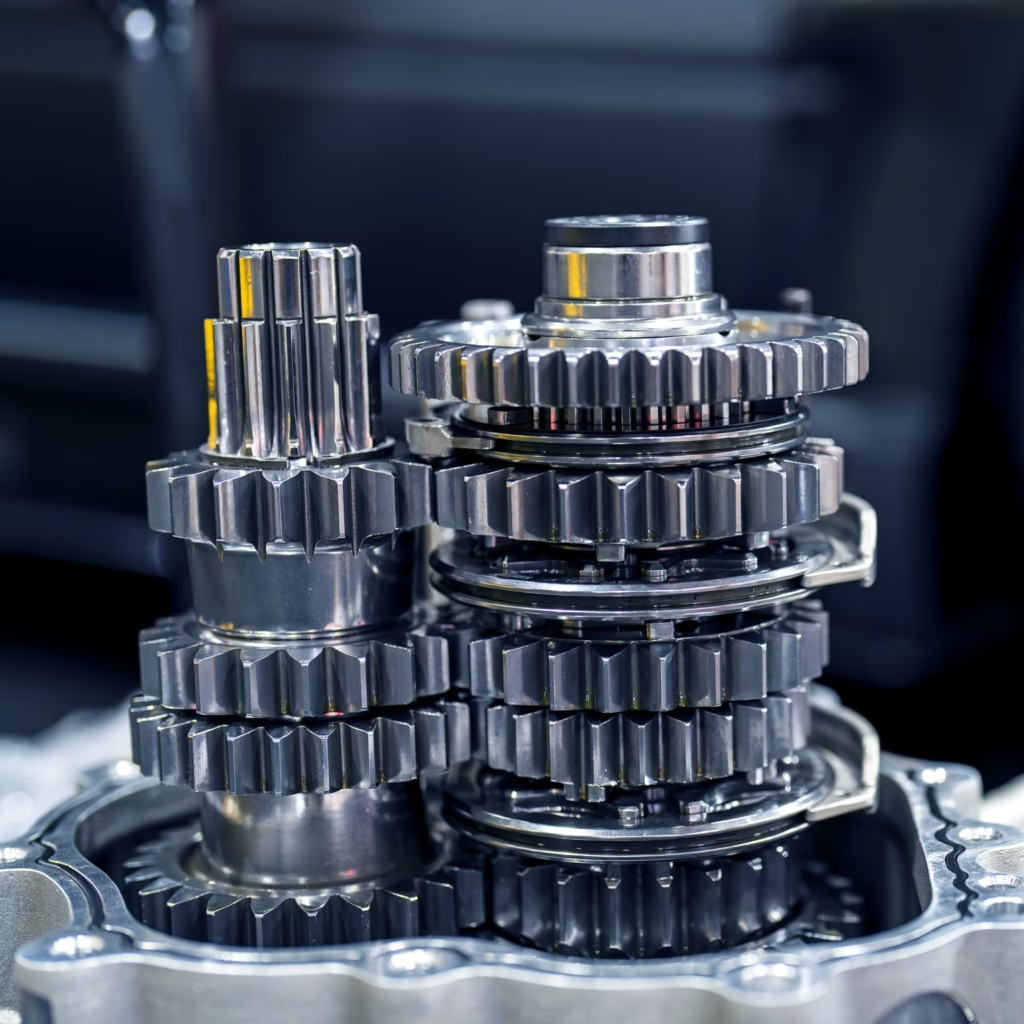
For an equipment manufacturer facing competition from low-cost new, used and remanufactured parts sold by independent distributors, we defined a spare parts remanufacturing strategy.

Monetising an industrial company’s dormant inventory
For an industrial company, we assessed the opportunity to monetise its dormant inventory by selling it on the French classifieds platform Leboncoin.
Leboncoin records nearly one million daily visits in its professional equipment categories.
Insights on repair, refurbishment and remanufacturing
The untapped potential of remanufacturing
Remanufacturing not only presents formidable economic, environmental and social challenges, but it could also be twice as profitable as manufacturing.
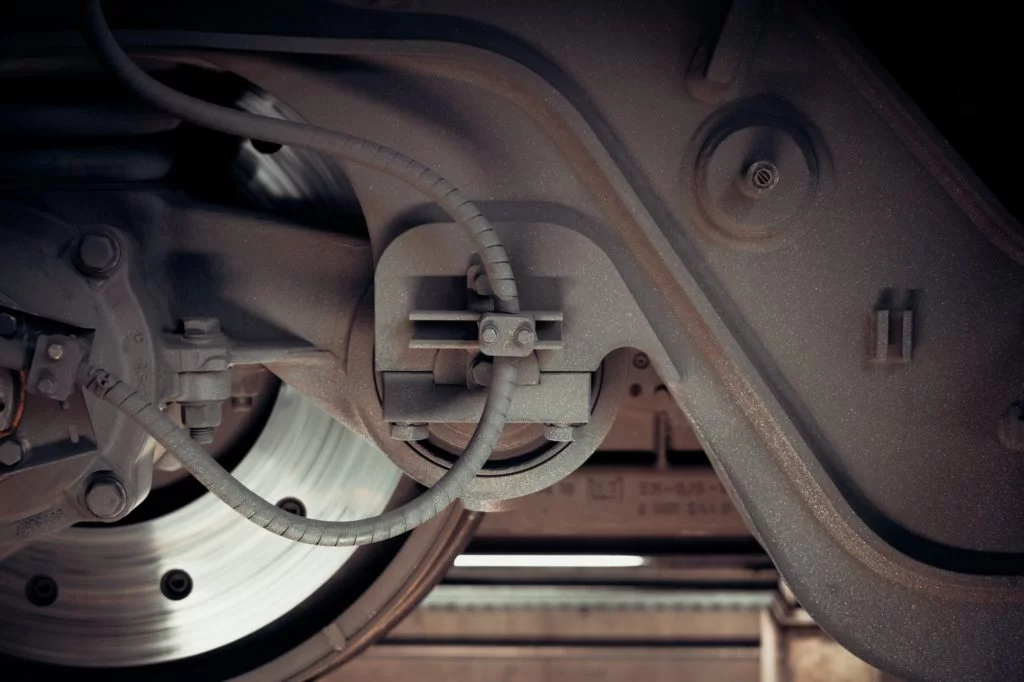
A €100 billion market
In France, remanufacturing likely accounts for less than 1% of industrial activity. Yet, it creates jobs, reduces production costs, and conserves resources.
Making products last
Thanks to remanufacturing, refurbishing and repair, products are not just consumables anymore, they become assets, our assets.

The machines that predict the future
Thanks to predictive maintenance, products can forecast failures before they occur.
Connect with our circular economy consultants to know more