Turning Surfactant Waste Into a Resource
Case study
Context
An Italian industrial site that manufactures surfactants cleans its reactors with steam or alcohol, generating around 1,700 tonnes a year of wash water loaded with surfactants, mineral salts and phosphates. These streams were sent to incineration, at an annual cost of close to €360,000, even though they contain recoverable materials, and incineration ran counter to the site’s greenhouse gas reduction targets.
The site had no identified recycling solution for this waste, nor any company in its region able to recover it.
Our approach
GATE C, in partnership with iNex Circular, ran a three-phase study: a preliminary diagnostic, a feasibility analysis, and implementation support.
During the diagnostic, the team characterized the two main waste streams and identified two technologies capable of reducing their water content: distillation, already tested successfully on site, and membrane filtration.
GATE C then used the iNex platform, which draws on open data to identify local industrial synergies, to map possible outlets. Given the variability of their composition, only three applications proved compatible: leather treatment, surface maintenance, and plant nutrition.
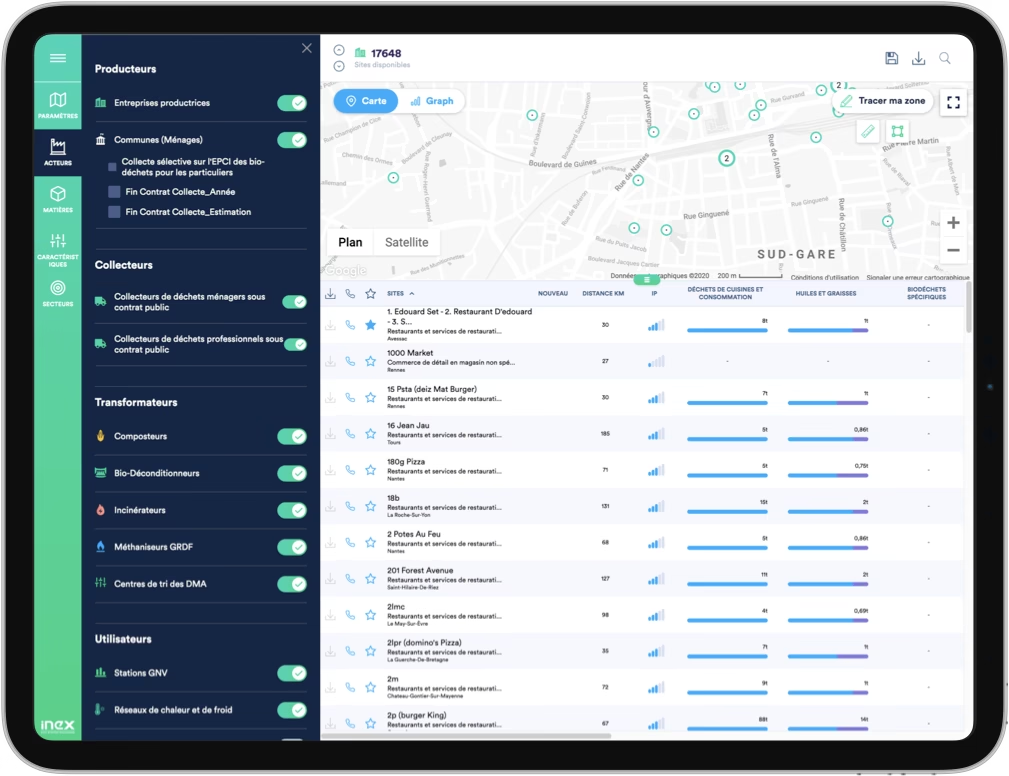
Finally, around thirty candidate companies were identified near the site and qualified. The leather treatment sector proved the most interested, and the site ultimately selected a leather treatment company to recover this waste stream.
Results
1,700 tonnes of waste a year identified as a recoverable resource rather than waste for incineration.
Around thirty candidate companies identified near the site using the iNex Analytics platform, several of them in leather treatment expressing interest.
€360,000 in estimated annual savings identified by the study, by avoiding incineration of the two waste streams.
Connect with our circular economy consultants to know more